2026-10-23 ·
Step By Step Guide To Safe Spray Foam Removal In Thornton Heath Homes
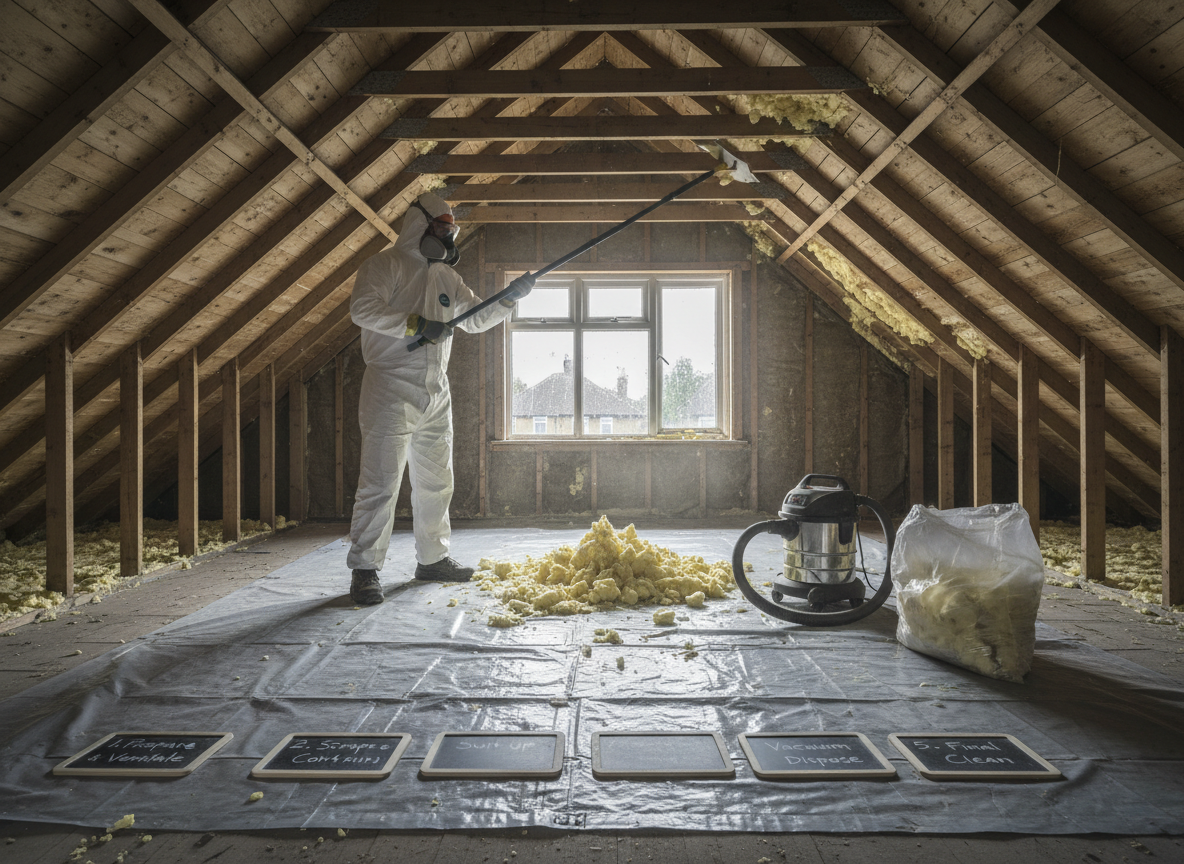
Homeowners in Thornton Heath frequently face issues with spray foam insulation in lofts of 1930s terraces and 1950s semis. The process starts with a full inspection to identify foam type and any underlying timber damage before any removal begins.
Initial Property Assessment
Begin by examining the loft space for closed cell or open cell foam application. In Thornton Heath homes built before 1960, check rafters for rot caused by trapped moisture. Measure the affected area in square metres and note ventilation gaps. An insulation assessment helps map out where foam meets original lath and plaster ceilings. This step prevents unnecessary disturbance to electrical wiring common in these properties. Local building regulations for spray foam removal in Croydon require documentation of any structural concerns before work proceeds.
Safety Measures Before Starting
Wear full PPE including respirators rated for isocyanates and sealed suits to avoid skin contact. Seal off the loft hatch with plastic sheeting to contain dust from Thornton Heath properties where shared chimneys can spread particles. Turn off electrics at the consumer unit and cover water tanks. Ground conditions around Junction Road properties often include clay soil that retains moisture, so ensure ladders sit on stable boards. These precautions address the damp conditions typical in South London lofts where spray foam has blocked airflow.
Removal Techniques for Local Homes
Use dry ice blasting spray foam removal for most Thornton Heath installations as it minimises substrate damage on older timber. Apply pellets at controlled pressure while vacuuming residue immediately. For thicker closed cell layers, combine with mechanical scraping only after softening. Avoid water-based methods that can worsen condensation issues already present in Croydon terraces. Work in sections of no more than two square metres to monitor rafter condition throughout. This approach suits the pitched roofs common in the area where access is limited.
Post-Removal Inspection and Repairs
After clearing the foam, inspect every joist for moisture content above 18 percent using a meter. Replace any damaged insulation with breathable alternatives suited to the local climate. Improve ventilation by adding ridge vents or soffit grilles to counteract the damp problems that originally prompted foam installation. Test for mould growth in corners where walls meet the roofline. Document all findings with photos for mortgage purposes in the Croydon area.
When to Call Specialists
Complex cases involving cavity wall spray foam removal or extensive loft spray foam removal require equipment beyond standard rental tools. Properties near Thornton Heath station with multiple layers from previous retrofits benefit from professional thermal imaging first. Contact teams operating 24/7 from Junction Road for urgent assessments when water ingress appears after heavy rain. Follow up with the guide on budgeting for spray foam removal in Croydon to plan costs accurately.