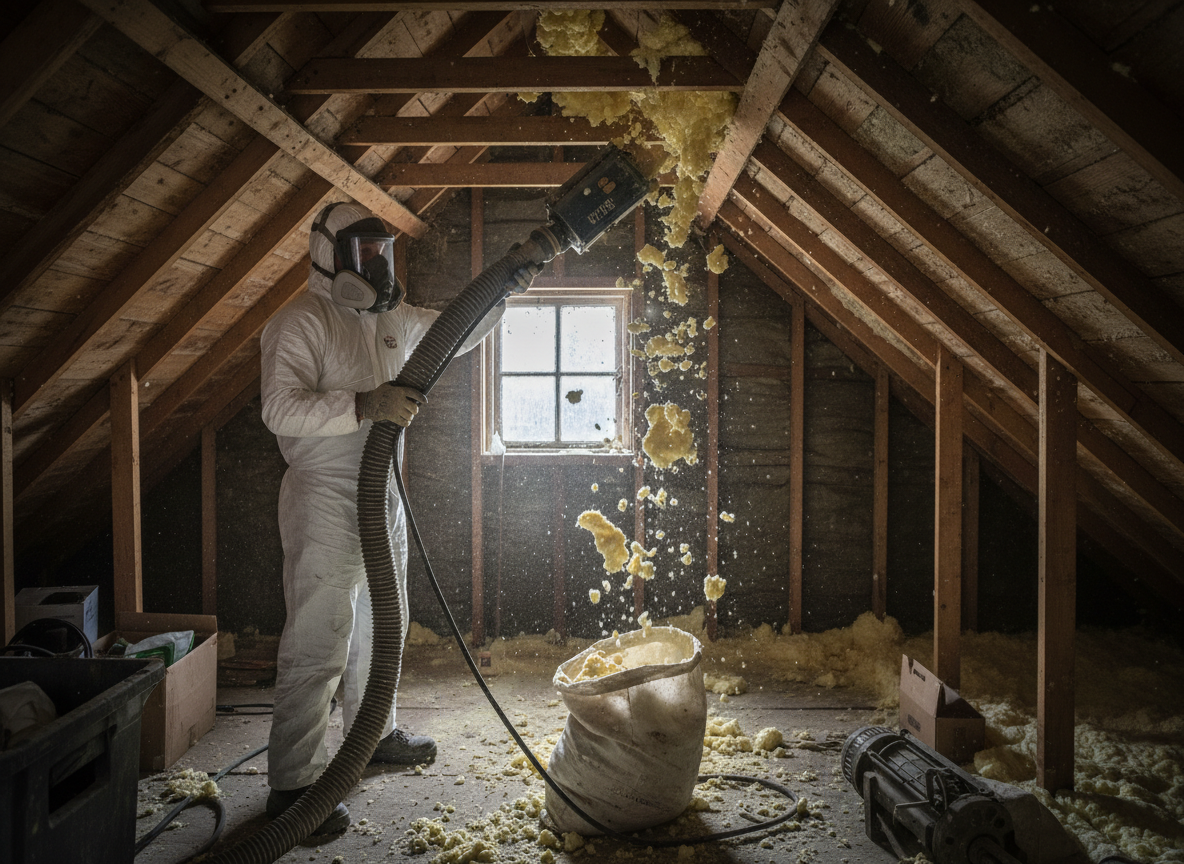
Spray foam insulation installed in Croydon lofts during the 2000s and 2010s often traps moisture against timber joists in the area's older terraced and semi-detached stock. Removal requires cutting the foam into manageable sections while protecting original lath and plaster ceilings below, especially in properties near Junction Road where roof voids are narrow and access is limited. Homeowners in CR2 postcodes frequently discover the foam has bonded to electrical cables and pipework, demanding slow, hand-tool work to avoid damage that could affect the whole house.
Weather in the Croydon area brings sudden downpours that can push water through any gaps left during extraction, so teams must seal the roof deck the same day. In winter, cold attic temperatures make the foam brittle and easier to chip away but increase condensation risk once the insulation is gone. Local planning rules around conservation areas in parts of South Croydon also mean crews document the void before and after to satisfy building control if the property later needs re-insulation.
Edge cases include foam that has expanded through gaps into bedroom ceilings or behind fascia boards on Victorian terraces common around East Croydon station. These situations call for internal ceiling repairs alongside the main removal. Dust and odour control matter on 24/7 call-outs because many jobs start at night when residents are home.
Technician insight
In Croydon, the thing that catches most people out with 24/7 Spray Foam Removal is how many Junction Road and nearby terraces still have original 1930s timber that the foam has bonded to directly; one wrong pull and you create a ceiling repair that wasn't in the plan.
Night Call on a Croydon Terrace
A homeowner in a pre-war terrace near East Croydon station reported water staining after heavy rain. Inspection showed spray foam had blocked ventilation and trapped moisture against the joists. Crew removed the foam in sections overnight, cleared the blocked vents, and sealed the deck before morning. The loft now breathes properly and the staining stopped.
How it works
- 1
Site Assessment
Technicians arrive at the Croydon address and inspect the loft, checking for hidden wiring, pipework, and structural timber condition before any cutting begins.
- 2
Containment Setup
Plastic sheeting and negative-air units are placed to keep foam dust from drifting into living spaces below, critical in the compact layouts typical of CR2 homes.
- 3
Foam Extraction
Foam is sectioned and removed by hand and vacuum, with extra care around original roof timbers that have settled over decades in Croydon terraces.
- 4
Final Clean and Seal
All residue is cleared, vents are checked, and the loft is left ready for inspection or new insulation if required by the homeowner.
Pricing
Cost depends on loft size, foam thickness, and access difficulty; upfront quotes given after inspection.