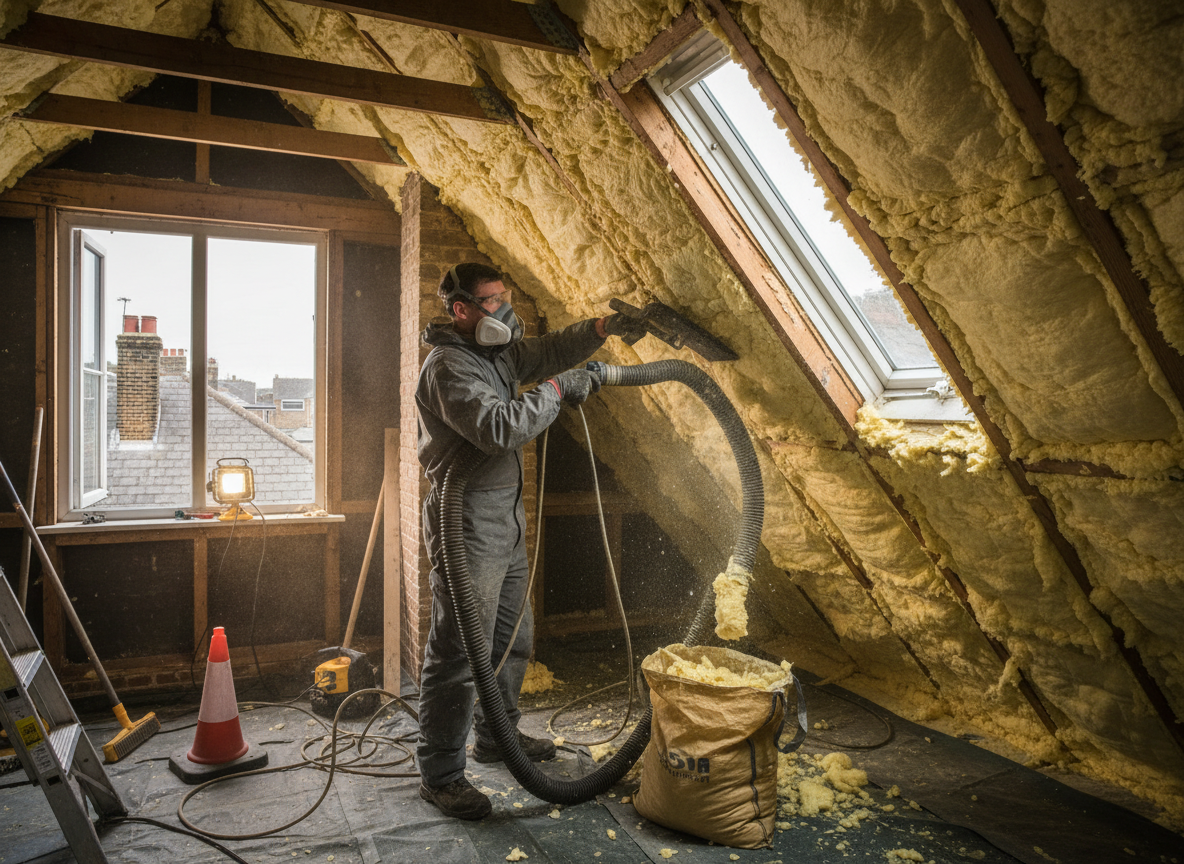
Croydon terraces and semis built before 1930 often have spray foam applied directly to lath-and-plaster ceilings or between rafters. Over time the closed-cell material traps condensation against timber, especially during the damp winters when temperatures hover around 5°C and rain is frequent. Removing it requires cutting through multiple layers without dropping debris into bedrooms below, then checking for hidden rot in the joists that run parallel to the party walls common in CR0 and CR2 postcodes.
Building regulations in the Croydon area now require that any re-insulation after foam removal meets current ventilation standards. Older properties frequently have ridge vents blocked by previous installations or no eaves ventilation at all, so we document the existing airflow before work starts. Homeowners in South Croydon and Purley often discover the foam was applied over original mineral-wool that had already settled, creating a double layer that must be separated carefully to avoid damaging fragile ceiling plaster.
Edge cases appear regularly on Junction Road and nearby streets where Edwardian bay windows meet the roofline. Foam sometimes extends down the cheeks of these bays, requiring internal access through the rooms rather than the loft. We always test for asbestos in textured coatings before disturbing any surface, a step that adds time but prevents contamination in homes of this age.
Technician insight
In Croydon, the thing that catches most people out with Residential Spray Foam Removal is how often the foam was sprayed straight onto damp rafters in 1920s terraces around South Croydon, where the lack of eaves ventilation turns the roof space into a moisture trap that only shows up once the foam is gone.
Foam Removal in 1920s Terrace Attic
Homeowners in a CR2 terrace noticed musty smells after heavy rain. We found closed-cell foam covering saturated rafters with no ridge ventilation. After careful removal and cleaning, we opened the original vents and left the timber to dry before any new insulation could be considered.
How it works
- 1
Initial Loft and Wall Inspection
We assess foam depth, substrate condition and ventilation gaps in Croydon properties, noting any signs of timber decay or blocked vents.
- 2
Containment and Access Setup
Dust barriers and negative-air machines are placed to protect living spaces below, with temporary access hatches cut only where necessary.
- 3
Mechanical Removal and Substrate Cleaning
Foam is cut and peeled in sections, followed by scraping residue from rafters and plaster to leave a clean surface ready for inspection.
- 4
Waste Removal and Site Handover
All material is bagged and removed from site, with a final check that original ventilation paths are restored before we leave.
Pricing
Upfront quotes follow an on-site inspection; cost depends on foam thickness, access difficulty and any timber repairs needed.