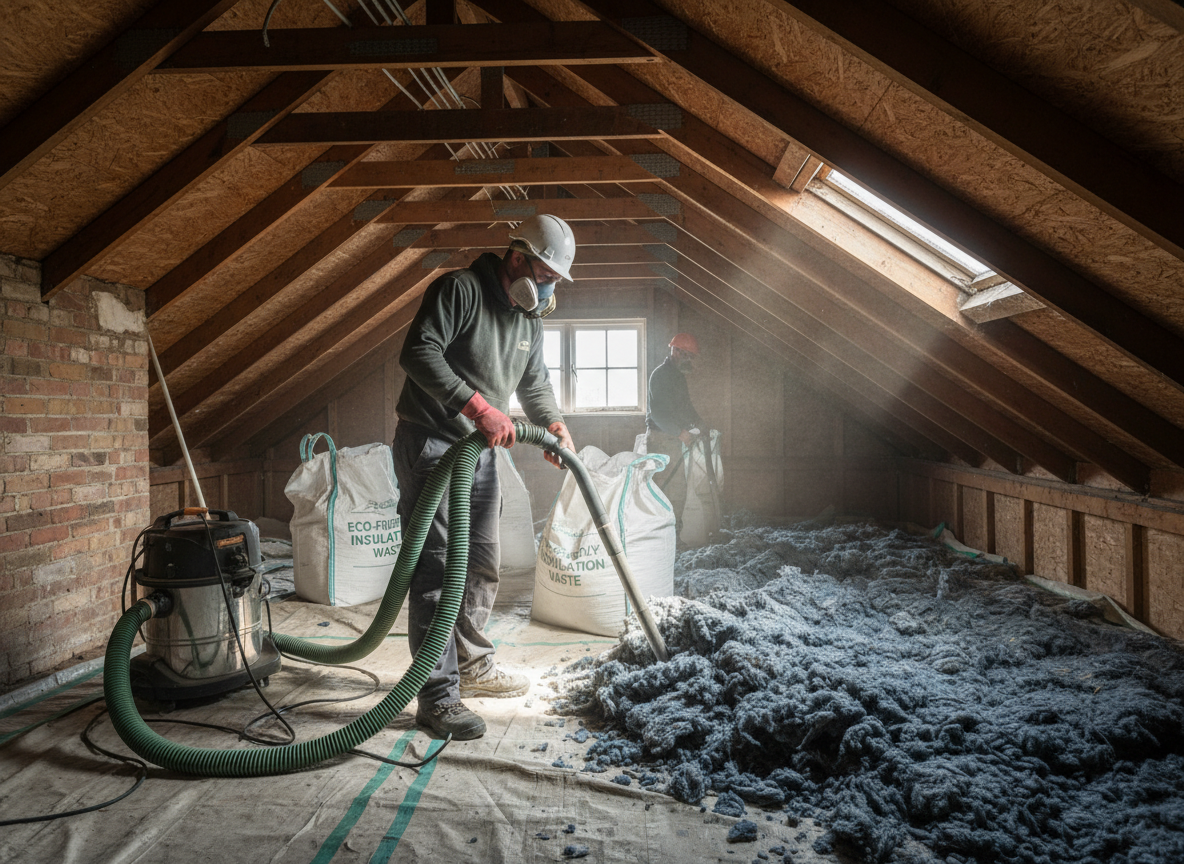
Croydon homes often feature 1930s semis and Victorian terraces with lofts that trap moisture after spray foam application. Removing this material requires careful separation from rafters and joists to avoid damaging original timber, especially where past condensation has softened the wood. Teams work section by section, using negative air machines to contain particles while the foam is cut and peeled away without releasing fibres into living spaces below.
The local climate brings frequent rain and high humidity that can leave residual damp behind foam layers. Proper removal includes checking for hidden water ingress around chimney stacks and valley gutters common on Croydon roofs. Once cleared, surfaces are dried and inspected before any new insulation is considered, preventing future mould growth that spreads quickly in the area's poorly ventilated roof voids.
Disposal follows strict waste rules for expanding foam products. All removed material is bagged on site and taken to licensed facilities rather than general landfill, reducing environmental impact. Access through narrow loft hatches in terraced houses often demands smaller equipment and extra time to protect ceilings and electrics running through the space.
Handling Older Croydon Housing Stock
Work in pre-war properties frequently reveals foam bonded directly to lath and plaster ceilings, requiring slower manual techniques to prevent collapse. Junction Road based crews know these details from repeated jobs across South Croydon and Addiscombe.
Technician insight
In Croydon, the thing that catches most people out with environmentally friendly insulation removal is hidden damp trapped behind the foam in 1930s semis around South Croydon and Shirley. Frequent London rain soaks into the roof space through ageing tiles, and the foam hides it until removal starts. Homeowners often assume a quick peel will fix everything, but we always have to stop and dry the timber first or the problem returns within months.
Foam Removal in a Croydon Terrace Loft
A homeowner in Addiscombe called after noticing musty smells in the bedrooms. Inspection found spray foam covering damp rafters from a blocked gutter. We set up containment, removed the foam in sections, dried the timber, and cleared all waste. The loft now breathes properly and the odour has gone.
How it works
- 1
Initial Loft Assessment
Survey the roof space for foam depth, attachment points, and any signs of damp or timber decay typical in Croydon terraces.
- 2
Containment Setup
Install sheeting and extraction units to keep dust and debris from entering the home during removal.
- 3
Foam Extraction
Cut and lift sections methodically, working around wiring, pipes, and original roof timbers without causing damage.
- 4
Site Clearance and Disposal
Bag all waste on site and remove it for proper recycling or licensed disposal while vacuuming remaining residues.
- 5
Final Inspection
Check rafters and insulation cavities for remaining material or moisture before handing the space back.
Pricing
Upfront quotes after inspection; cost depends on loft size, foam thickness, and access difficulty in Croydon homes.